
Brass Fixture Tariff Loophole: LED vs. Socket Fixtures
Canadian integrated-LED fixtures face a new tariff line that standard-socket and brass designs may avoid—but their final duty remains unresolved.
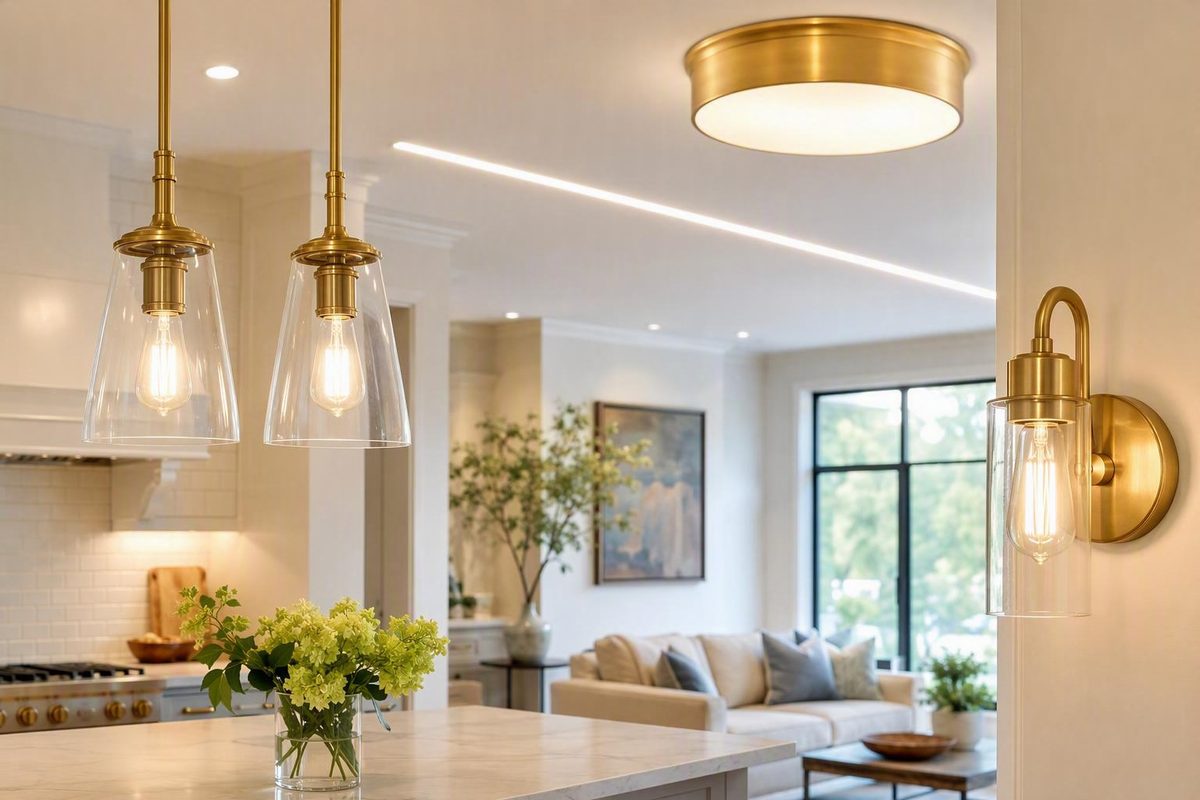
A Canadian-made, non-brass fixture designed solely for LEDs can face the reported 50% additional U.S. tariff, while a visually equivalent fixture with a standard Edison socket may sit outside the four named LED-fixture lines. That is the practical brass fixture tariff loophole: fixture architecture can change exposure to the new duty. It is not a blanket exemption, because CBP has not clarified the alternative treatment of standard-socket or brass fixtures, and ordinary duties or other Chapter 99 measures may still apply. Inside Lighting reported the new measure and the unresolved classifications.
The reported tariff took effect August 22, 2026. Covered Canadian products receive no USMCA relief under the industry account, and the additional duty reportedly stacks with existing Section 232 metals tariffs on affected finished products. Those claims should be checked against the implementing action, current Chapter 99 language, and CBP entry instructions before pricing or making an entry.
This is general classification information, not customs or legal advice. The governing documents effective on the entry date and the construction of the specific product control the result.
Why The Category-Wide View Sounds Reasonable
The received wisdom is that Canadian lighting simply became roughly 50% more expensive, making brand, finish, and supplier more important than fixture type. That reading is understandable. The measure reportedly covers nearly $20 billion in Canadian goods, offers no USMCA relief for covered products, and became effective immediately rather than after a long product-by-product transition. For fixtures that fall within the named tariff lines, the cost increase is real and potentially stacks with other duties. Inside Lighting’s reporting describes the affected trade and lighting classifications.
The consensus is right about covered Canadian fixtures. It is too broad about the category.
The five reported HTS lines are 9405.11.60, 9405.11.80, 9405.42.60, 9405.42.84, and 9405.99.40. Four are fixture classifications framed around products designed solely for LED light sources. The fifth concerns certain luminaire parts. The reported descriptions of 9405.11.60, 9405.42.60, and 9405.99.40 also contain exclusions for brass.
That wording makes fixture type and construction relevant. A standard-socket fixture designed to accept a replaceable Edison-base lamp is not the same article as a fixture designed solely around an integrated LED module. A qualifying brass fixture may also fall outside a provision limited to articles “other than brass.”
Neither distinction proves that the product is duty-free. It means the product may not fit the reported provision carrying the new 50% duty and must be classified elsewhere.
The Socket Distinction In Electrician Terms
An integrated-LED fixture arrives with the light engine built into the luminaire. Its LED board, driver, heat management, optics, and housing are designed as one system. When that light engine or proprietary driver reaches the end of its service life, repair may require a matching module or replacement of the fixture.
A standard-socket fixture arrives with a conventional lamp holder, commonly an Edison-style socket. The owner supplies a replaceable bulb. That bulb can be LED, but the fixture itself is not necessarily designed solely for an LED source; it can accept any compatible lamp within its electrical and thermal ratings.
That last distinction matters. Installing an LED bulb does not turn a standard-socket fixture into an LED-only fixture. Customs classification concerns the merchandise as imported and its objective design, not the lamp a homeowner may screw into it later.
The reported four fixture lines specifically concern LED-designed products. Inside Lighting characterized standard-socket designs as an unresolved gray area rather than clearly covered merchandise. On the language reported so far, the socket-and-bulb version has a credible route outside those four lines. Its alternative HTS classification and resulting total duty have not been established in the reviewed material.
Choose the imported fixture’s light source, base material, and manufacturing country; the checker flags the reported tariff path and a possible lower-duty equivalent.
This screens for the reported 50% Canada lighting measure. It does not calculate ordinary duties, other Chapter 99 duties, or customs fees.
A Canadian, non-brass, LED-only fixture matches the clearest reported path to the additional 50% tariff.
Lower-new-duty candidate: Specify the equivalent fixture with a standard replaceable-lamp socket, then use a compatible LED bulb. Verify its alternative HTS classification before relying on savings.
Matches the reported country and LED-fixture trigger.Gray area
May fall outside a named line, but no zero rate is established.Not this measure
Outside the Canada-specific screen; other duties may apply.
The full matrix remains visible without JavaScript. With JavaScript, the selected row is shown first; use the button to display every scenario.
| Origin | Fixture Design | Material | Reported Screening Result |
|---|---|---|---|
| Canada | Integrated LED | Other base metal | Likely exposed to reported 50% additional duty |
| Canada | Integrated LED | Brass | Gray area: “other than brass” may redirect classification |
| Canada | Integrated LED | Mixed / unknown | Unresolved: document material and possible essential character |
| Canada | Standard socket | Other base metal | Gray area: outside plain wording of four LED-only fixture lines |
| Canada | Standard socket | Brass | Gray area: socket design and brass both require alternative classification |
| Canada | Standard socket | Mixed / unknown | Gray area: verify design, material, and affirmative HTS code |
| Outside Canada | Integrated LED | Other base metal | Not this Canada-specific measure; check other duties |
| Outside Canada | Integrated LED | Brass | Not this Canada-specific measure; check other duties |
| Outside Canada | Integrated LED | Mixed / unknown | Not this Canada-specific measure; establish actual origin |
| Outside Canada | Standard socket | Other base metal | Not this Canada-specific measure; check ordinary classification |
| Outside Canada | Standard socket | Brass | Not this Canada-specific measure; check ordinary classification |
| Outside Canada | Standard socket | Mixed / unknown | Not this Canada-specific measure; verify material and origin |
| Unknown | Integrated LED | Other base metal | Determine origin; Canadian origin could create exposure |
| Unknown | Integrated LED | Brass | Determine origin, then resolve the brass classification |
| Unknown | Integrated LED | Mixed / unknown | Determine origin and document material construction |
| Unknown | Standard socket | Other base metal | Determine origin; socket classification remains separate |
| Unknown | Standard socket | Brass | Determine origin and affirmative alternative classification |
| Unknown | Standard socket | Mixed / unknown | All three inputs require supporting documentation |
Source: Inside Lighting’s August 2026 reporting on HTS 9405.11.60/.80, 9405.42.60/.84, and 9405.99.40. “Gray area” means CBP treatment was not clarified in the reviewed reporting; it does not mean duty-free.
What “Other Than Brass” Actually Does
The words “other than brass” exclude qualifying brass merchandise from the particular provision containing those words. They do not remove brass fixtures from the Harmonized Tariff Schedule or assign them a zero rate.
If a Canadian wall fixture is legally characterized as brass and therefore does not fit the reported wording of 9405.11.60, the classification analysis continues. The importer still needs an affirmative 10-digit HTS classification, the ordinary rate for that classification, a supported country of origin, and a review of any applicable Chapter 99 duties and customs fees.
The official material reviewed for this article does not establish one alternative code or ordinary rate for brass fixtures. The current USITC Harmonized Tariff Schedule is the primary schedule, and the edition effective on the entry date controls.
“Brass” also describes several different constructions in lighting catalogs:
| Catalog Description | Customs Fact That Matters |
|---|---|
| Solid brass | Actual alloy and role of the brass body |
| Brass-plated steel | Substrate, plating, and complete construction |
| Antique brass finish | Finish name does not establish base material |
| Mixed-metal fixture | Applicable rules may require component analysis |
A thin decorative brass layer does not automatically make the complete fixture brass. The opposite shortcut is also unsafe: the presence of steel beneath a finish does not by itself settle classification. Drawings, material specifications, component weights and values, and the structural function of each material may be relevant.
Mixed-material fixtures can require an essential-character analysis when the applicable classification rules direct the inquiry there. The heaviest, most expensive, or most visible material does not necessarily control every case.
Fixture Type Can Matter More Than Finish
Consider two wall sconces with the same shape and visible finish. The first contains a permanent LED board and dedicated driver. The second contains an E26 socket and ships without a bulb.
The integrated model may fit one of the reported LED-designed fixture provisions if its material, mounting type, origin, and other characteristics also match. If it is Canadian-origin and non-brass, that places it in the clearest reported path to the additional 50% duty.
The socket model does not fit the plain description of a fixture designed solely for LEDs. It may therefore avoid the newly targeted LED-fixture lines even when the buyer installs an LED bulb after importation. The alternative classification still needs to be identified, so “outside the new line” should not be rewritten as “tariff-free.”
A solid-brass integrated fixture presents a different gray area. It may be excluded by the “other than brass” wording even though it is LED-only. A brass standard-socket fixture potentially has both distinctions, but neither supplies the missing alternative code or rate.
Separately imported components require their own analysis. The reported 9405.99.40 line covers certain luminaire parts not made of glass, plastics, or brass. A canopy, arm, socket assembly, housing, or decorative component is not automatically classified like the finished fixture. Calling disassembled merchandise “fixture parts” on an invoice does not determine its legal treatment.
Classification Is Not A Choice Between Rates
An importer cannot select whichever plausible code produces the lowest landed cost. Classification begins with the article as imported, the heading and subheading language, applicable legal notes, and the General Rules of Interpretation.
The working sequence is:
- Identify the complete product, unfinished article, or part as imported.
- Determine its correct 10-digit U.S. HTS classification.
- Find the ordinary duty associated with that classification.
- Establish country of origin under the applicable rules.
- Apply any preference or origin-based additional measure.
- Review other Chapter 99 duties, exclusions, and customs fees.
CBP describes identifying the HTS code as the first step in determining duty treatment and states that CBP makes the final duty determination. It also provides electronic and binding ruling procedures when classification remains uncertain. CBP’s duty-rate guidance explains those options.
For lighting, the technical file should identify whether the product mounts to a wall or ceiling, stands on a floor or table, or is imported as a part. It should show whether the light source is integrated, replaceable, proprietary, or absent; whether the fixture is designed solely for LEDs; and the material, function, weight, and supported value of significant components.
Socket specifications matter. “LED compatible” is not the same as “designed solely for LED.” A conventional socket may accept a replaceable LED bulb while preserving a materially different fixture design for classification purposes.
Country Of Manufacture Is A Separate Gate
The reported additional tariff is country-specific. A fixture must have the relevant Canadian origin as well as a covered classification before that measure can apply.
Brand headquarters, a Canadian supplier address, or shipment through Canada does not by itself establish Canadian origin. A U.S. or European brand can sell Canadian-origin merchandise, and a Canadian brand can sell fixtures manufactured elsewhere. Inside Lighting’s broader analysis focuses on actual manufacturing and notes the tooling, equipment, expertise, capacity, and ramp-up barriers involved in moving production. Its sourcing analysis distinguishes manufacturing from brand nationality.
Changing packaging, labels, invoices, or the ship-from address does not automatically change origin. A defensible record traces casting, stamping, machining, plating, LED-board or driver production, wiring, mechanical assembly, programming, testing, and packaging by country.
The same HTS classification can remain in place while a properly supported origin change alters exposure to a country-specific tariff. Conversely, a different declared origin unsupported by manufacturing facts does not create lawful tariff savings.
Calculate The Duty In Separate Layers
The 50% figure is an additional reported tariff, not a complete landed-cost calculation. The available material does not supply the alternative ordinary rate for a brass or standard-socket fixture, so a reliable sample dollar comparison cannot be made here.
| Layer | Required Determination |
|---|---|
| Ordinary duty | Rate for the correct 10-digit HTS code |
| Canada measure | Whether classification and origin are covered |
| Other Chapter 99 duty | Whether another measure also applies |
| Fees | Entry and product-specific charges still due |
Do not assume that an ordinary duty-free rate eliminates Chapter 99 exposure, that USMCA status overrides a separate additional tariff, or that exclusion from one line removes every other duty. The industry report says the new measure stacks with existing metals tariffs for affected finished products, but the calculation basis and order should be confirmed in the governing documents.
For procurement comparisons, keep the unverified new-duty exposure separate from the fixture price. An integrated Canadian fixture matching a named line belongs in the exposed scenario. A standard-socket or qualifying brass alternative belongs in an unresolved scenario until its affirmative classification is documented. A fixture manufactured outside Canada is outside this particular country-specific measure, though other duties may still apply.
The Evidence Needed Before Using The Gray Area
A useful fixture file starts with an exploded drawing, internal and exterior photographs, installation instructions, and the bill of materials. Material records should distinguish solid alloy, substrate, plating, coatings, fasteners, wiring, heat sinks, drivers, sockets, and decorative components.
The file should also identify the condition at importation. A complete sconce, an unfinished body, a boxed collection of components, and an individual replacement socket can produce different analyses even when they belong to the same product family.
For a standard-socket model, retain the lamp-holder specification and product documentation showing that it accepts replaceable lamps rather than operating solely with an integrated LED module. For a claimed brass exclusion, retain alloy certifications, substrate and plating details, component weights and values, and an explanation of the brass component’s role.
Origin records should map manufacturing operations by country rather than repeat the supplier’s address. If production moves, document which components, machinery, labor, and assembly operations actually changed.
Recurring, high-value, mixed-material, or unresolved fixtures justify review by a licensed customs broker or customs counsel. A product-specific CBP ruling may be appropriate when the classification materially affects bids, fixture schedules, or long-term supply agreements.
The Narrow Buying Advantage
The useful buying comparison is not LED versus incandescent operation. A standard Edison-socket fixture can still use an efficient LED bulb. The customs distinction is between a fixture designed solely around an LED source and a fixture designed around a replaceable lamp.
For a Canadian-made, non-brass model, the integrated version has the clearest reported exposure to the new 50% duty. The corresponding standard-socket version may avoid those specific LED-designed fixture lines while delivering LED illumination after a replaceable bulb is installed.
That is a legitimate specification and sourcing distinction, not permission to relabel merchandise. The imported product must actually have the socket architecture described, and its alternative classification, origin, ordinary rate, and other additional duties must still be verified.
The brass route is similarly narrow. “Other than brass” can remove a qualifying product from one reported description, but it does not establish where that product lands next. The current advantage is therefore an apparent exclusion from the newly targeted lines—not a confirmed duty-free pathway.